Showing posts with label Buddhism. Show all posts

Friday, October 3, 2014

Buddhism Plain and Simple - The Practice of Being Aware, Right Now, Every Day by Steve Hagen: Review

If you want to know the clear and simple insights of Buddhism, this is the right book. Buddhism Plain and Simple The Practice of Being Aware, Right Now, Every Day profoundly written by Steve Hagen is something that reminds the readers of being aware of the self. Steve Hagen is a Zen Priest, a long-time teacher of Buddhism, and the author of How the World Can Be the Way It Is.

The book is easy and simple to understand and it guides readers to the path of Buddha’s wisdom and his observations. It revives the ancient teachings on awareness, where one learn to be aware of the self every single moment and every single day.

The approach to the teachings on awareness is frantically different from other books, it’s easy to understand the practice of awareness, the four noble truths and the eightfold path of Buddha. It also teaches the causes of sufferings and describes undeniable sufferings such as death. He clearly defines consciousness and Truth and Reality.

We are also reminded of the change, changes goes on whatsoever, every moment. That’s where awareness play a great role. Hagen teaches how to practice awareness on self on the very present moment, here and now. Meditation comes into scene while practicing awareness, some of the methods on meditation are well described here.


He notes: Don’t expect to get anything from meditation – including enlightenment. If you really want enlightenment. Just notice what thus – Mind – actually is. Notice that a grasping mind is the antithesis of what you say you want.

If you are interested you can find the book at Amazon.com


Monday, June 16, 2014

Words of My Perfect Teacher – A Brief Review

A worth reading classical Tibetan Buddhist book by Patrul Rinpoche introduces readers into the depth of Tibetan Buddhism. It is one of the rare classical books translated into English language by the Padmakara Translation Group trying to reach out to the wider audiences.

The technical aspects of the different stages of meditations are briefly described, which I believe that would be beneficial if practiced consistently. Some of the higher meditation techniques are also briefly described which obviously seem to be unnatural, but practical. Well, it’s all about the enlightenment and to achieve it, the book has it the right path.

The fact impermanence of earth or life and the universe itself has been revealed; which also includes the beings which live in the outer universes. Obviously the principle of cause and effect are comprehensively described and the solutions revealed too.

As everyone is well aware about the Karmic effect, brief confrontations with the bad Karma and accumulation of good Karma is very well instructed. 

A certain part of Guru Yoga and the ultimate method for arousing the wisdom of realization are well instructed attributing how capable we are and how much perseverance and patience we have. 

So as the title of the book, the teachings in the book are based on the teachings by his Master/teacher of the author without much manipulation. 

Monday, April 28, 2014

Young Monks Folding the Unfolded


The young and energetic monks folding the newly fetched Thangkas right after a Buddhist ceremony.


Sunday, February 16, 2014

Sunday, December 15, 2013

The Art of Happiness - Brief Review

The Art of Happiness – A Handbook for Living is a finely written happiness book relating the east and the west by His Holiness Dalai Lama and Howard C. Cutler (Psychiatrist based in Arizona).

The Buddhist practices on happiness are related to the scientific practices in the west through series of questions, answers, teachings and discussions. The book tends to create the Buddhist principles on happiness into a daily practice or habit for a happy living, whether one is Buddhist or not.


The Art of Happiness reasons out one’s purpose of life, that is Happiness (or Enlightenment in Buddhism) and the happiness is barely known in some parts of the world. All the beings have the right to happiness and the happiness has the sources, so to find the sources of happiness, the book describes various eastern and western methods of training one’s mind of happiness. Also teaches the various methods and reasons to develop the compassion by deepening the connection to other beings. To achieve happiness, one has to transform sufferings and deal with anger and the book has it, how to transform one’s sufferings and deal with anger through various means like finding meaning in the pain and suffering and bringing about change.

Wednesday, December 11, 2013

Layman’s Compassion

Basics that we are unaware,
Yet explored for humanity,
Encompassed by few,
Through the altruistic love,
To make the world a better place.

Sufferings that we beings endure,
Are hardly empathized by others,
But there are few,
Enduring through the compassion,
To make the beings smile.

Trying to walk in other’s shoe,
We feel what they feel,
We rejoice what they rejoice,
We suffer what they suffer,
Our compassion is a paved path to happiness,

Only if one sets mind to free other’s sufferings!


Tuesday, December 3, 2013

Through the Sikkim

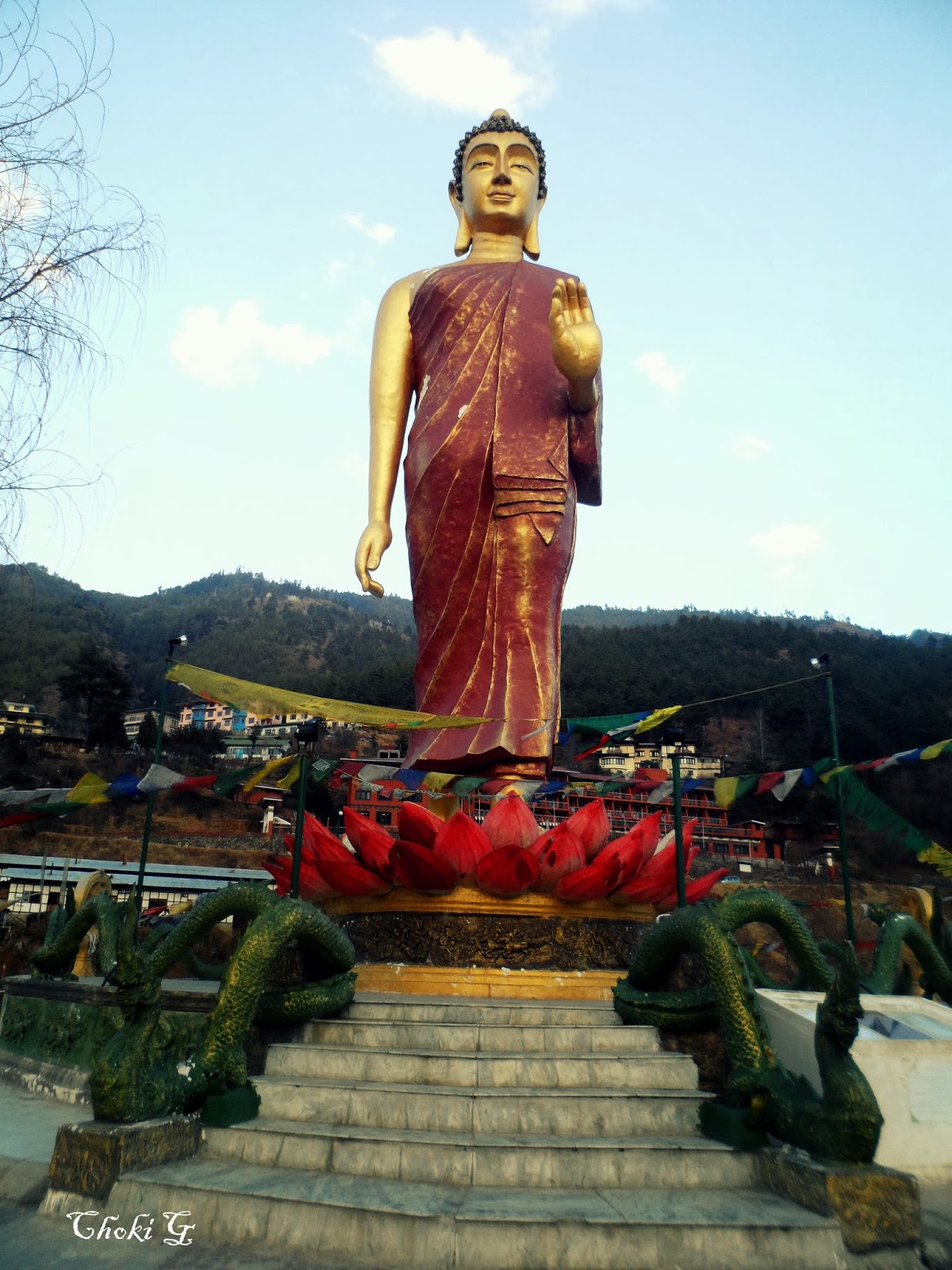
The new Buddha Statue

Path to Buddha-hood

Sikkim Tea garden

Monks in Rumtek, Sikkim

lol  (Gangtok)

Guru Padmasambhava

Samdruptse, Sikkim (29/11/13)

Friday, October 4, 2013

Cycle of Birth and Death


Supreme from the above watches us
We know not what lies ahead of us
Anomalously lamenting at times
Mothers falling in predicament
Unaware of congenital trauma
Often dwelling in so called Samsara
Faded with time the cries of the birth
But awaits the inevitable death
For soul lives in eternal realm
Humans bounded by the worldly affairs
Sympathizes by the red and yellow robes
Webbed by the vacillating insights
Endowed with the facades of the world
One knows not supreme’s desires
For we incongruously dwell
So shall we are born and dead
And dead and reborn
Until supreme’s wishes accentuate us
We are here in Samsara for eternity
Living like a dream so baffling
In the cycle of birth and death 

Monday, September 30, 2013

If you harm, you are harmed ~ Story from one of the Buddha’s past lives


The Buddha shared this story to the children several thousand of years ago. This story is an edited excerpt from Old Path, White Clouds by Thich Nhat Hanh.

Buddha took birth or the form of earth, plants, humans, birds and many other animals for many thousand years prior to his present birth as human. 

It’s the story of heron, a crab, a plumeria tree, and many small shrimp and fish. Here, the heron was a wicked and deceitful creature who caused death and suffering to many other beings. The heron made suffering to the plumeria tree too, Buddha was the plumeria tree. He learned from the incidence – if you deceive and harm others, in turn, you will be deceived and harmed.

Buddha was the plumeria tree growing close to a fragrant, cool lotus pond. No fish dwelled in that pond but not far from that pond was a shallow and stagnant pond in which many fish and shrimp and a crab lived. A heron flying overhead upon seeing the crowded situation of the fish and shrimp devised a plan. Hence, he landed at the edge of their pond and stood there with a long, sad face.

The fish and shrimp asked “Mister Heron, what are you thinking about so seriously?” Heron replied “I’m thinking about your poor lot in life. Your pond is muddy and foul. You lack adequate food. I feel terrible pity for your hard lives.” The small creatures asked heron if he could be of any help. 

Heron said “Well, if you allow me to carry each one of you over to the lotus pond not so far from here, I could release you in the cool waters there. There is plenty to eat over there.”

“We would like to believe you Mister Heron, but we have never heard that herons care anything about the lot of fish or shrimp. Perhaps you only want to trick us in order to eat us up.”

“Why are you so suspicious? You should think of me as a kind uncle. I have no reason to deceive you. There really is a large lotus pond not far from here filled with plenty of fresh, cool water. If you don’t believe me, let me fly one of you over there to see for himself. Then I’ll fly him back to tell you whether or not I’m telling the truth.”

The shrimp and fish discussed the matter at some length before at last agreeing to allow one of the elder fish to go with the heron. The fish was tough and bristly, his scales as hard as stones. He was a swift swimmer who could also maneuver well on sand. The heron picked him up in his beak and flew him to the lotus pond. He released the old fish into the cool waters and let him explore every nook and cranny of the pond. The pond was indeed spacious, cool, refreshing, and a plentiful source of food. When the heron returned him to the old pond, the fish reported all he had seen.

Convinced of the heron’s good intentions, the shrimp and fish begged him to fly them to the pond one by one. The crafty heron agreed. He picked up a fish in his beak and flew off. But this time, instead of releasing the fish into the pond, he landed near the plumeria tree. He placed the fish in a fork of the tree and ripped off its flesh with his beak. He tossed its bones by the foot of the plumeria tree.

Buddha was that plumeria and he witnessed this entire taking place. He was enraged, but there was nothing he could do to stop the heron. A plumeria’s roots are firmly anchored in the earth. There was is nothing a plumeria can do but grow branches, leaves, and flowers. He cannot run anywhere. He could not call out and warn the shrimp and the fish about what was really happening. He could not even stretch his branches to prevent the heron from eating the helpless creatures. He could only witness the horrible scene. Every time the heron brought a fish in his beak and began to tear at its flesh, he was filled with pain. He felt as though his sap would dry up and his branches break. Drops of moisture like tears collected on his bark. The heron did not notice. Over a number of days, he continued to bring the fish over to devour them. When all the fish were gone, he began to eat the shrimp. The pile of bones and shells that piled up by his roots could have filled two large baskets.

He knew that as a plumeria tree his job was to beautify the forest with his fragrant flowers. But at that moment he suffered terribly from not being able to do anything to save the shrimp and fish. If he had been deer or a person he could have done something. But anchored by his roots to the ground, he could not move. He vowed that if he was reborn as an animal or a human in a future life, he would devote all his efforts to protect the weak and helpless from the strong and powerful.

When the heron had devoured all the shrimp and fish, only the crab remained. Still hungry, the heron said to the crab, “Nephew, I have carried all the fish and shrimp to the lotus pond where they now live happily. You are all alone here now. Let me take you to the new pond, too.”

“How will you carry me?” asked the crab.

“In my beak, just as I carried all the others.”

“What if I slipped out and fell? My shell would shatter into a hundred pieces.”

“Don’t worry. I’ll carry you with utmost care.”

The crab thought carefully. Perhaps the heron had kept his word and truly carried all the shrimp and fish to the lotus pond.  But what if he had deceived them and eaten them all? The crab devised a plan to insure his own safety. He said to the heron, “Uncle, I’m afraid your beak is not strong enough to hold me securely. Let me wrap my claws around your neck to hold on while you fly.”

The heron agreed. He waited for the crab to crawl onto his neck and then he spread his wings and flew into the air. But instead of carrying the crab to the lotus pond, he landed by the plumeria tree. 

“Uncle, why don’t you put me down by the lotus pond? Why did we land here instead?”

“What heron would be so stupid as to carry a bunch of fish to a lotus pond? I am no benefactor, nephew. Do you see all those fish bones and shrimp shells at the foot of the plumeria? This is where your life will end, as well.”

“Uncle, the fish and shrimp may have been easily fooled, but you can’t trick me so easily. Take me to the lotus pond at once or I will cut you off your head with my claws.”
The crab began to dig his sharp claws into the heron’s neck. Seized by sharp pain, the heron cried out, “Don’t squeeze so hard! I’ll take you to the lotus pond right this minute! I promise I won’t try to eat you!”

The heron flew to the lotus pond where it intended to let the crab down by the water’s edge. But the crab did not release its hold on the heron’s neck. Thinking about all the fish and shrimp so cruelly deceived by the heron, the crab dug his claw deeper and deeper into the heron’s neck until he cut right through it. The heron dropped down dead and the crab crawled into the pond.

Monday, September 16, 2013

Nyungne: Buddhist Fasting Practice

I was intrigued, when I heard of Nyungne because I hardly had the knowledge about it although I was familiar with the name Nyungne. Shortly, I came to know about it, when I attended the Nyungne practice at Ramthangkha, Paro this September, 2013 coinciding Thimphu Tshechu (Mask Dance Festival). I vacillated over my participation in the Nyungne practice before I gathered some information on Nyungne from various sources.  Thus, I concluded that I need to attend the fasting practice eventually it’s a benevolent of the world and oneself.

Before I scribble about my experiences, I would be writing down a brief background on Nyungne practice.  Nyungne practice is so structured to purify our negative karma and accumulate merit or accomplish enlightened qualities. The practice is based on the practice of Thousand Armed Chenrezig (Avalokiteshvara), Bodhisattva of Compassion. The practice has been originated from Gelongma Pelmo, one of the few female Buddhist lamas, who eventually attained enlightenment.

The Nyungne practice in Ramthangkha, Paro involved more than 35 hours of practice, which included strict keeping of vows. It involves 30 hours of fasting from food and drink, recitation of Buddhist mantras and prostrating frequently. (Vows: not to kill, not to steal, not to commit sexual misconduct, not to lie, not to take intoxicants, not to take high or luxurious seats, not to sing, dance or wear ornaments and not to eat and additional vows of not eating, drinking and talking). It is also said that if we complete one Nyungne practice, the door closes for one’s rebirth in lower realms. It is a known fact that Gelongma Pelmo practiced Nyungne at Ramthangkha in Paro, hence the place is renowned for Nyungne practice.

Gelongma Pelmo was born to a Royal Family in India, she had chosen to follow the path of Buddhist practice which she practiced for 12 years, after abandoning the Royal palace and privileges. She overcame severe illness of leprosy and attained enlightenment. Thereafter, she passed down the practice of Nyungne, which still continues to be practiced these days.

Ramthangkha Lhakhang (Temple), Paro
I am sharing some brief experiences that I had during my participation in the Nyungne practice. We started off the practice at Ramthangkha Temple at 4 am; we were accompanied by other locals which consisted mostly of senile community. We altogether were around 50 of us. We took the Nyungne vows as mentioned above, in the first day and also we were briefed about the practice. We had some room for forgiveness, if we are unable to carry out or fulfill our vows.

We were fed lavishly at the first day till the noon, everyone had heavy lunch and thereafter, we had to skip our dinner but of course, we had the privilege to drink tea till 9 pm. The next day was our strict fasting period, where we should strictly undertake the vows. We got up the next day at 4 am; we are not allowed to talk nor eat but keep our vows. We recited mantras although we wanted to talk to each other, but instead we were looking at each other’s face.

We had been prostrating in front of altar and recited mantras the whole day without having any food or drinks led by a lama.  We were fine while depriving us from breakfast and lunch, but without dinner it was a difficult situation, even to have a sound sleep. I toured around kitchen but in vain, in fact it just titillated my starvation. In fact most of us slept for maximum of one hour but I slept for only for half an hour. That night I realized how the hell would be like. It was really an egregious situation for me; no food, no sleep, no talk, no music, nothing else, but I regret not. The situation has become an inveterate practice for the older participants; they showed no sign of malaise.  

It was also an unforgettable and interesting experience. Some of us happened to talk accidentally and thus we got to prostrate apologetically invoking for forgiveness. For some loquacious persons, it would have been a difficult task to remain quiet but just reciting some prayers. It wasn't so easy to keep the vows; most of us broke some trivial vows and had invoked for forgiveness a hundred times or more. It was really a hard task to communicate with one another without talking, I wondered for the first time how will it be, to lead a dumb life. It was also fun to watch others but difficult to keep it to oneself.

For someone like me who is a late sleeper, faced difficulty in sleeping as early as 7 pm and waking up at 1:30 am, unfortunately I got to sleep for about half an hour despite being enervated. I managed to get some nap in the temple though I had to invoke for forgiveness. Our fasting period came to an end at 5 am, where initially we were offered to drink a handful of holy water and thereafter a series of drinks and food. Hence, everyone seems to be convalescent and alive once again with a conspicuous smile on everyone’s face after the heavy meal. I realized how fortunate we are and even realized that life as such has nothing in it, it’s just a realm towards attaining enlightenment. Now, I have conceived that there is really a hell and heaven.


NB: Highlighted only few incidents. No Proof Read

LinkWithin

Related Posts Plugin for WordPress, Blogger...